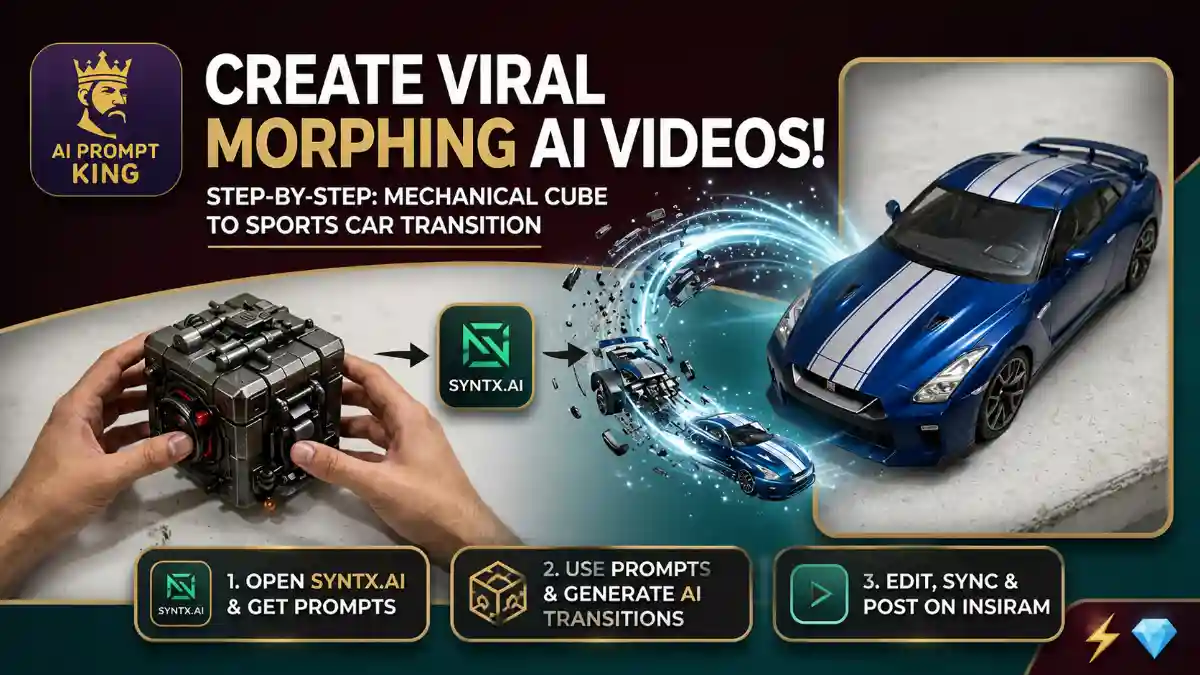
Aaj kal Instagram Reels par futuristic gadgets aur morphing transitions ka trend chal raha hai. Isme ek mechanical cube ek dam se cinematic car ya kisi aur advanced object mein transform ho jata hai. Agar aap bhi aise hi viral AI videos banana chahte hain, toh is tutorial ko follow karein! Step 1: Open SYNTX.AI
Sabse pehle aapko high-quality images aur video generation ke liye SYNTX.AI website ka use karna hoga.
- Google par jayein aur SYNTX.AI search karein.
- Pehle link par click karke website ko open karein.
- Image Section mein jayein aur GPT Image 2 model ko select karein.
Step 2: Generate High-Quality Images
Hume do images ki zarurat hogi—ek starting object (Cube) aur ek final object (Car).
Image 1 Prompt (Mechanical Cube):
“A highly detailed close-up shot of a futuristic mechanical cube being held by two human hands. The cube has a dark matte metallic finish with subtle wear, angular panel lines, and small red accent markings. In the center of the visible face is a circular, layered button-like mechanism with geometric rings, resembling a power core. The hands are realistic with natural skin texture. The scene is placed on a slightly dirty white tabletop. Ultra-realistic, 4K quality, product photography style. Aspect ratio 9:16.”
Image 2 Prompt (Futuristic Car):
“A highly detailed close-up of a blue sports car scale model placed on a worn white tabletop. The car has a metallic dark blue paint finish with dual silver racing stripes running across the hood and roof. It features realistic details like headlights, side mirrors, tinted windows, alloy wheels, and a rear spoiler. Soft diffused lighting, shallow depth of field. Ultra-realistic, 4K quality, product photography style. Aspect ratio 9:16.”
Donon images ko generate karke download kar lein.
Step 3: Create the Morphing Video
Ab hum in images ko video mein convert karenge.
- SYNTX.AI ke Video Section mein jayein.
- Seedance – 2.0 model ko select karein.
- Apni dono images ko wahan upload karein.
- Niche diya gaya Image to Video Prompt paste karein:
Video Prompt:
“Extreme close-up of a mechanical cube. Button press activates internal mechanisms. Panels split, rotate, and extend with visible pistons, gears, and hinges. Components reassemble into a detailed vintage car within 5 seconds. Ultra realistic textures, cinematic lighting, macro lens, depth of field, smooth seamless transformation, high precision motion.”
- Generate button par click karein aur aapki viral video bankar taiyar ho jayegi!
How to Use This Guide
This tutorial is part of VelocAI’s growing library of practical AI guides. Every step above has been tested on real devices before publishing, so the workflow you see is the same one that produced the demo result. If a step looks unfamiliar, scroll back to the top and match the screenshots one by one before moving forward — small details (aspect ratio, export quality, audio sync) make a big difference in the final output.
Getting the Most Out of This Tutorial
- Read the whole guide once before starting, then follow it step by step.
- Bookmark the tools and prompts mentioned — you will reuse them.
- If a step does not work the first time, change one variable and try again. Most issues come from a single setting that is slightly off.
- Save your final output project file so you can iterate without starting from scratch next time.
Related Resources on VelocAI
If you found this useful, the homepage carries the latest tutorials, tool reviews, and prompt packs published this week. Browse our AI Tools category for hands-on reviews, the AI Prompts archive for tested prompts you can copy-paste today, and our About page if you want to know more about how VelocAI tests and publishes content.
FAQ
Is this method free to use?
The core workflow uses tools that have a generous free tier. Where a paid plan unlocks faster rendering or higher quality, the post mentions it explicitly. You can complete the basic tutorial without paying anything.
How long does it take to recreate this?
Most readers finish in 10–20 minutes the first time and under 5 minutes once familiar with the tool. The slowest part is usually the rendering or export step.
Will this work on my phone?
Yes — this guide is mobile-first wherever possible. The tutorial uses tools available on both Android and iOS. If a desktop step is required it will be clearly marked.
What if my output looks different from the demo?
Small differences in source media (lighting, framing, resolution) change the final result. Re-check the inputs first, then revisit the settings step by step. Most variations come from a single mismatched parameter.
Can I use this commercially?
It depends on the licence of the underlying tool, music, or assets. Check the original tool’s terms of service before using output for paid client work or branded campaigns.
Found an error in this guide or want to suggest an update? Drop us a note via the contact page — we read every message.